
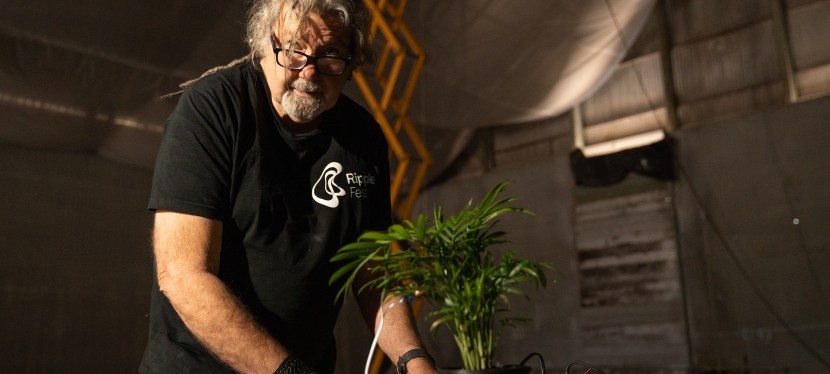
Studio 88 is pleased to welcome Dr Greg Pritchard as an artist-in-residence: a deeply curious, multi-disciplinary contemporary artist whose practice moves fluidly across writing, visual art, performance, digital media, installation and conceptual work. Across decades of practice, Pritchard has consistently returned to one central concern: how humans see themselves in relation to the more-than-human world, and what damage is done when we imagine ourselves as exceptional. His residency takes place in February 2026 as part of the Reviving Nature programme.
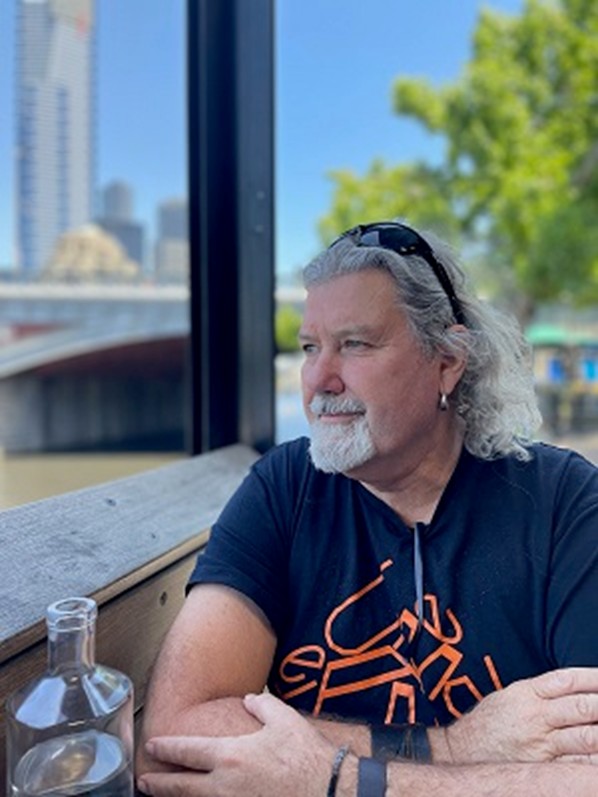
Dr Greg Pritchard is an Australian artist, writer and curator with a long and varied history in both independent and institutionally supported arts practice. He holds a PhD in Literature and Environmental Philosophy from Deakin University, where his research engaged ecocriticism, eco-linguistics and environmental ethics, and a Masters in Public Art (Art and Public Space) from RMIT University, completed with distinction. His Masters research, Shadows and Performance, continues to inform his visual and performative work, particularly his interest in projection, shadow, and ephemeral forms.
Pritchard’s early academic training also included studies in biological science, an influence that quietly persists in his attentiveness to ecosystems, animal perception, and plant life. His formal education is matched by extensive practical experience: he has worked for more than two decades as an artist, curator, producer, artistic director and cultural leader, often in regional and community-embedded contexts.
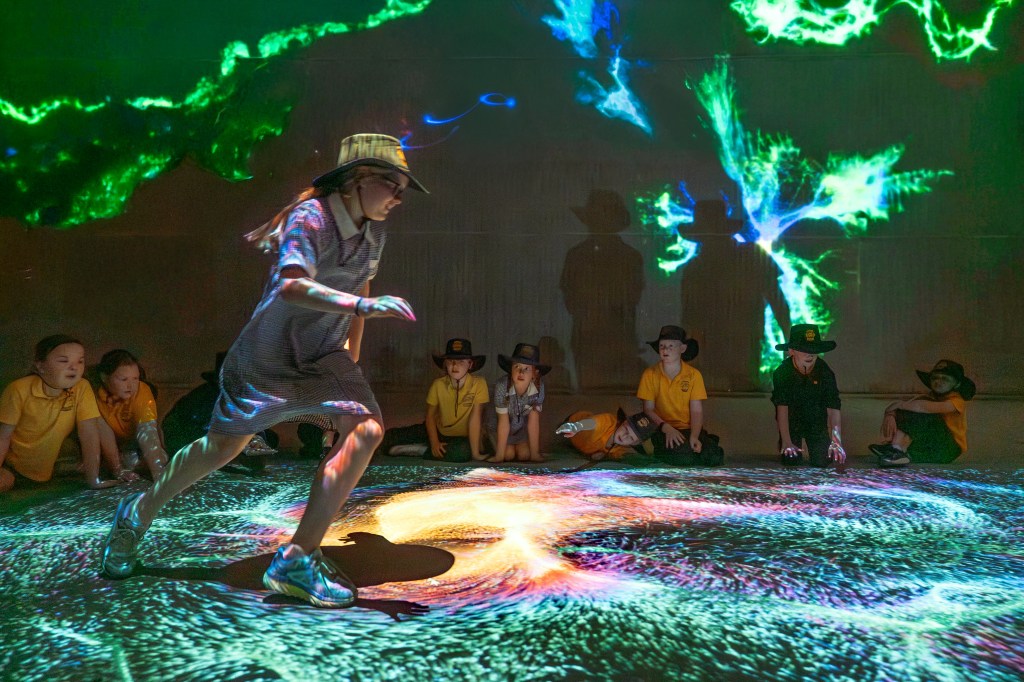
He is a founding force behind Natimuk Frinj Biennale in regional Victoria and remains part of a Natimuk-based collective known for creating large-scale, community-engaged performances on iconic structures, originally the town’s wheat silos. These ambitious works combine aerial dance, projection, shadow puppetry, live music and deep local participation, dissolving boundaries between audience, performer and place.
His professional career includes senior roles such as Artistic Director of Artstate Tamworth, Cultural Program Director for Artlands Dubbo, General Manager of ACT Natimuk, and Creative Producer for Ripple Fest (2024) in Campaspe Shire. He has curated and produced major public art, projection and performance projects across Australia, including The Poppet (Creative Victoria Regional Centre for Culture commission, Bendigo, 2018).
Pritchard has undertaken artist residencies in Singapore, Indonesia and Senegal, as well as numerous Australian residencies, including Warrnambool (VIC), Wagga Wagga (NSW), and Sydney (NSW) in 2025. His work has been supported through a range of institutional commissions, grants and prizes, including the Naomi Williams Wiradjuri Poetry Prize, which he won in 2020.
Alongside his visual and performance practice, Pritchard is an accomplished writer across genres: poetry, essays, criticism, academic writing and creative non-fiction. His work has appeared in publications such as Sydney Review of Books, Australian Journal of American Studies, Green Letters (UK) and The Canberra Times. He has also published widely as a freelance journalist and editor, and established Skink Press, a small publishing house dedicated to community storytelling.
Greg Pritchard’s practice sits at the intersection of art, ecology and philosophy. His work asks how humans understand — and misunderstand — the lives of animals, plants and landscapes, and how those misunderstandings have shaped environmental damage.
At the core of his thinking is a resistance to human exceptionalism. Drawing on environmental philosophy, contemporary science and poetics, his work often attempts to unsettle the idea that human perception is the measure of all things. Instead, he is interested in umwelt — the unique sensory worlds inhabited by animals, plants and other non-human beings — and in how art might gesture toward those worlds without claiming to fully translate them.
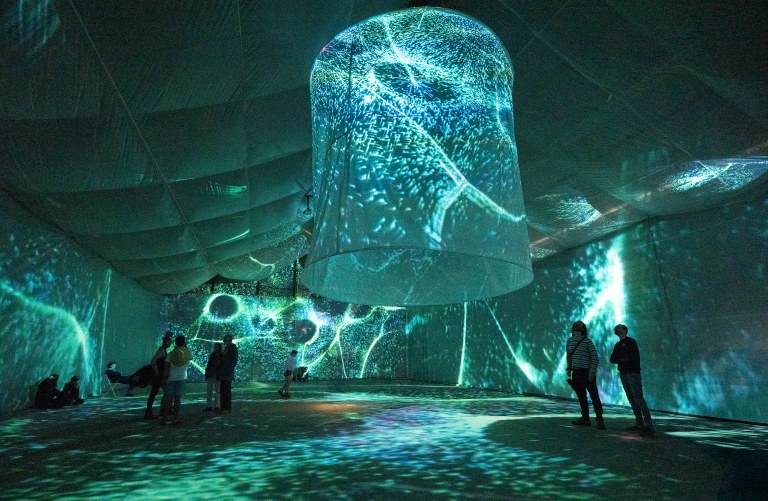
Much of Pritchard’s recent work is highly digital: projection, sound, data-driven imagery and performance technologies are used not to dominate nature, but to listen to it more closely. He frequently works with shadows, microscopic and macro imagery, ultra-sensitive microphones and contact mics, seeking forms that can reveal what is normally unseen, unheard or overlooked.
Writing remains a parallel and inseparable strand of his practice. Whether through poetry, performance text or critical essays, language is treated as a material that can be stretched, broken and re-imagined — just as landscapes and bodies are.
Underlying all of this is a sense of urgency: that reviving curiosity, attentiveness and care toward the natural world is not a luxury, but a necessity in a time of ecological crisis.
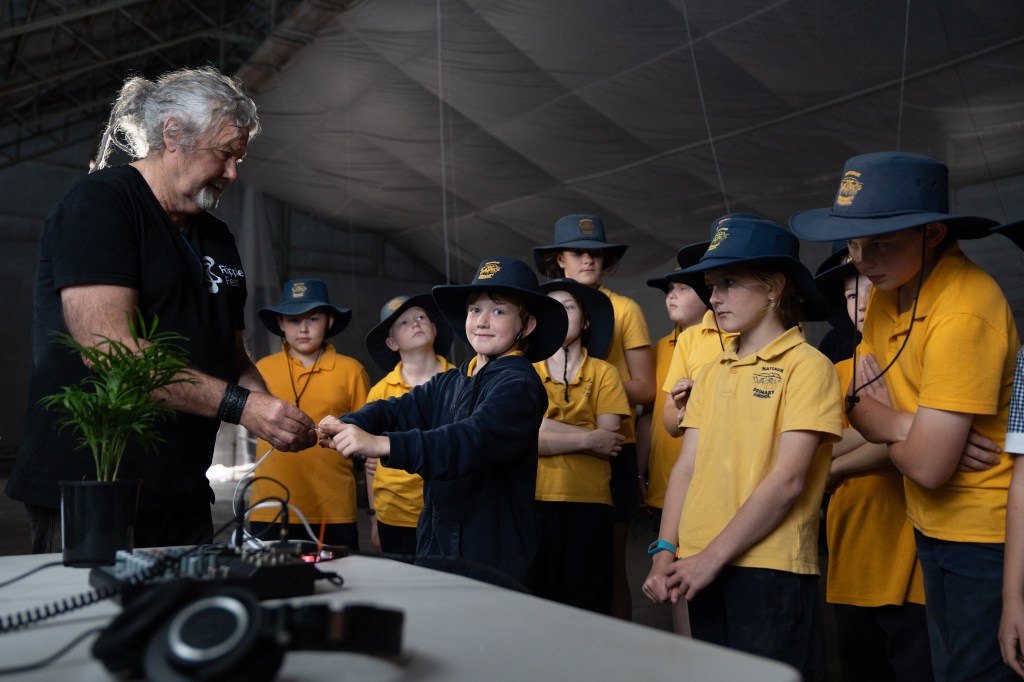
During his residency at Studio 88, Greg Pritchard will develop a new body of work that continues his investigation into plant life, perception and interconnection. The proposed project focuses on plants as active, sensing beings, informed by contemporary research into plant intelligence and communication. Writers and scientists such as Suzanne Simard, Robin Wall Kimmerer and Peter Wohlleben have profoundly influenced his thinking, particularly Simard’s research into mycorrhizal networks and kin recognition in forests — evidence that plants cooperate, remember and respond in complex ways that challenge older, extractive models of ecology.
At Studio 88, Pritchard plans to work with a selection of everyday plants and herbs, approaching them as collaborators rather than subjects. Using macro and microscopic photography, he will create highly detailed images that reveal structures and patterns invisible to the naked eye. These images will be paired with sound works, generated through ultra-sensitive microphones, contact mics and a pocket scion device that converts plant data into sound. Shadow will also play a role in the project, allowing plant forms to be rendered as ephemeral, shifting presences — simultaneously familiar and strange.
Central to the residency is exchange: Pritchard is keen to work alongside local plant experts, growers and community members, learning from embodied, place-based knowledge. Research will begin prior to the residency, but the work itself will remain open-ended, responsive to site, climate and conversation.
The resulting work is envisioned as a multi-modal installation combining image, sound and shadow, inviting audiences to slow down, listen carefully, and reconsider their relationship with the vegetal world — not as backdrop or resource, but as kin.
More about Dr Greg Pritchard on his website.
Studio 88 accepts applications on an ongoing basis. Check out our residency program and apply now.
 Studio 88 Artist Residency