
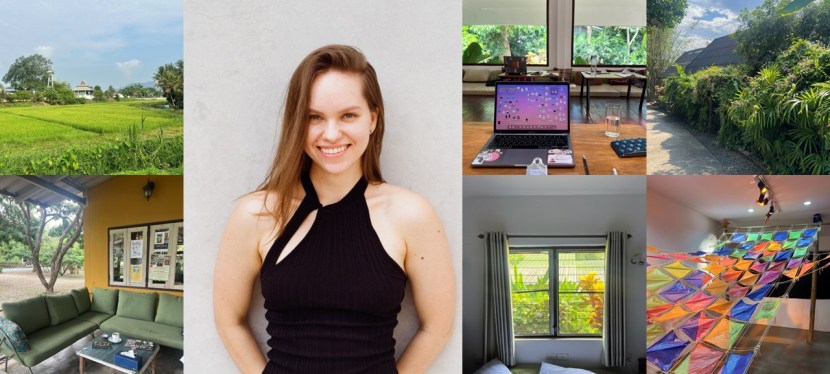
Studio 88 was delighted to welcome its first Visiting Creative through the Creative Research Stay programme in May 2026: Alexandra Kalinkina, also known as Sasha. During her stay, Sasha immersed herself in a variety of activities, from attending an exhibition opening and a lecture on artist residencies to participating in inspiring conversations with artists.
Sasha is Russian art historian, researcher, and cultural practitioner. She is currently based in Bangkok where she explores art galleries and cultural programs. Sasha helps artists to find productive context for their art, establish connections with art institutions, and advance their career. She holds a Master’s degree from Peking University in China Studies.
Here Sasha shared her reflecting on these experiences.
Part 1.
I was invited to Studio 88 in Chiangmai for a 3-day Creative Research Stay. I came at the perfect time – the new cohort of artists had just arrived at the residency. My stay was full of events, new encounters, and explorations. Following their needs and interests, Aom, the residency curator, tailored the cultural program to help them integrate into the Chiangmai artistic community. Enthusiastically, I followed along.
From an exhibition opening to a lecture on residencies in South-East Asia and then to the session where all of us shared their backgrounds and future aspirations – these three days have allowed me to fully see what the residency offers.
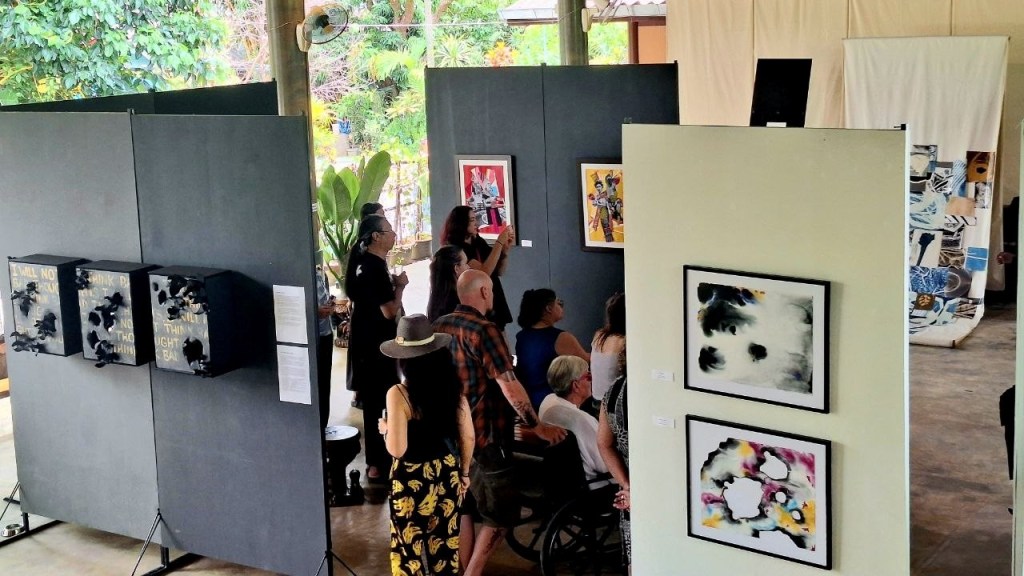
The “Evolving Identities” group show presented artworks by Jameel Haiat, Hilcia Peña, and Ben Robinson. Three artists with very different backgrounds who use various mediums were united under the same theme of “identity” — as a fluid, mosaic-like entity that all of us struggle to define. Jameel Haiat exhibited his mixed-media installations – self-portraits – that reflect his experience of being sick and being cured. He used pieces of cardboard, red thread and nails to create this unsettling feeling of discomfort that usually comes with emotional struggles cancer survivors have. Hilcia Peña’s collages with fabrics invited viewers to engage with the artist’s cultural roots in the most indirect way – through design patterns of another culture. Hilcia researched the fabrics patterns of indigenous people of Thailand and found striking similarities with her Cuban/Mexican heritage. This discovery inspired her bright collage works. Ben Robinson showed a big canvas with cyanotypes and silver gelatin photograms. Showing pieces of worn clothes, underwear, Thai silk patterns, Ben documents the transition period in his life.
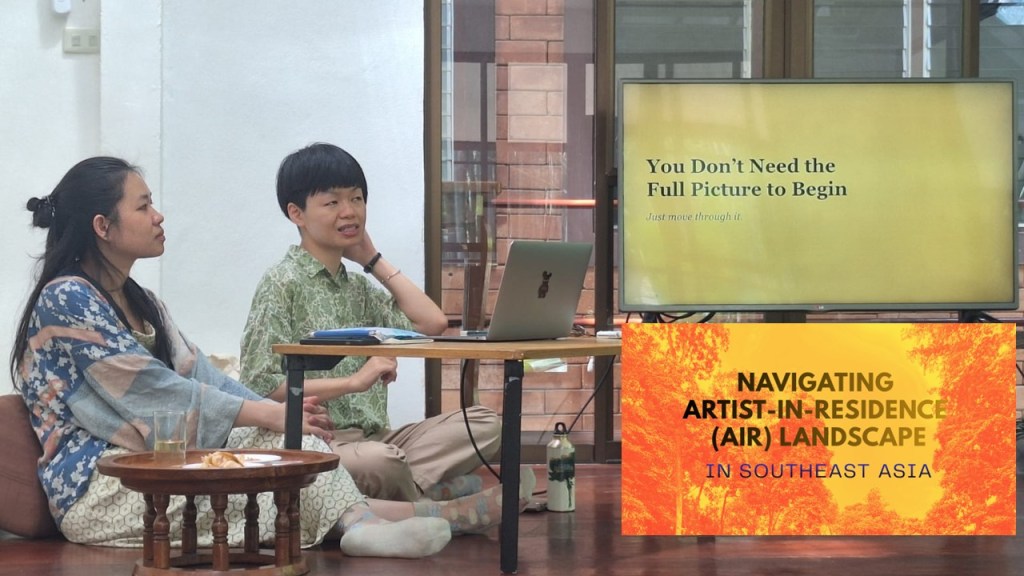
The next important highlight is a lecture by AiRViNe – Artist-in-Residence Vietnam Network – where Nguyễn Tú Hằng and Trần Thảo Miê presented the results of their months-long research on the residencies of South-East Asia. After traveling around Japan, Philippines, Malaysia, Indonesia, Timor-Leste, Thailand, Laos, and Cambodia, they shared some insights into the developing residencies landscape of the region. Through their research they have summarized the unique features of the residencies in these countries to help artists make informed decisions when they choose an institution and create the correct strategy when they apply. For instance, AiRViNe summarized the following aspects: residencies of SEA are community driven and grow organically from them, quite often they are run by artists and collectives rather than by institutions; as a consequence these residencies stick to experimental formats and provide artists with freedom to try new things outside of institutional requirements; this also comes with the flexibility of residency and adaptability to artists themselves who in their turn shape the residency with their projects and intentions. I’m sure this lecture was interesting not only for me as a researcher, but also for artists who are also exploring the possibilities around SEA.
The following day I was invited to join Aom in one of the most important meetings of the orientation week – talks with the residing artists who shared their proposals and plans for the residency.
Part 2
I spent three days at Studio 88 as part of the Creative Research Stay program. And this is the second part of my impressions from my time in the residency.
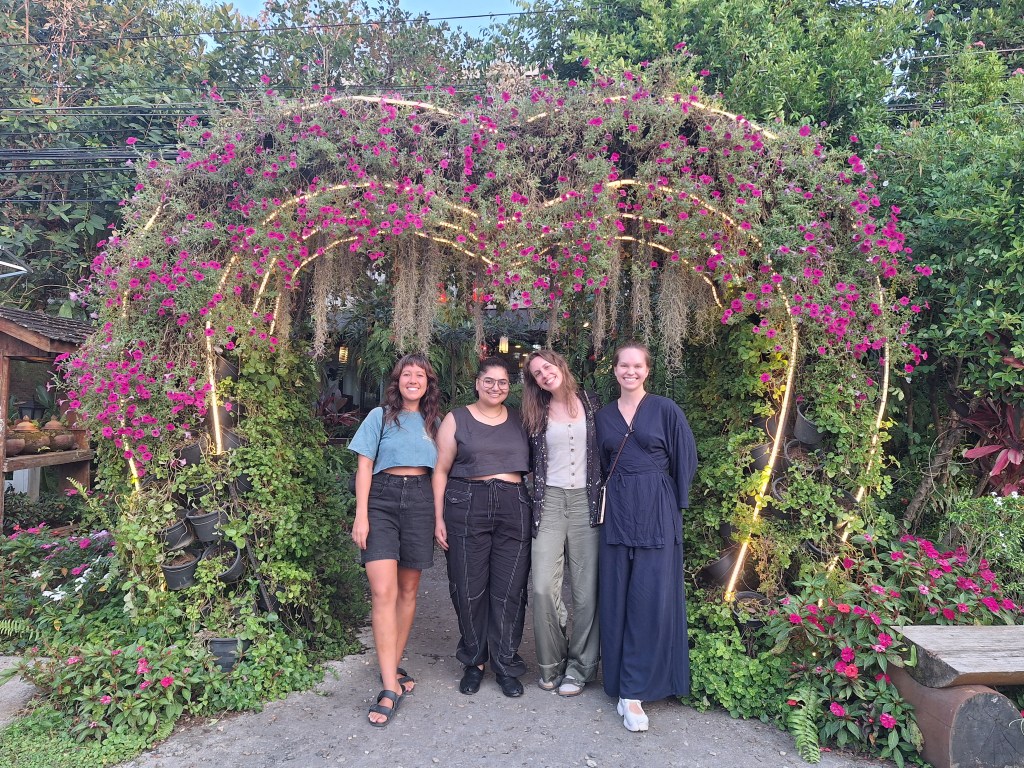
The most inspiring part of my stay was a series of one-on-one meetings with residing artists – Ellamay, Ayza, and Aurelie. We discussed their creative proposals and plans for the residency, talked about how the residency can assist artists and where to find the necessary resources. Ellamay wanted to work with her family archive in Chiangmai to rethink her Thai roots and rediscover her ancestors’ stories stored in an old family house. Ayza came to Studio 88 to summarize her multiple passions and write a manifesto that would reflect her philosophy on art and creativity. Aurelie decided to use the time in the residency to feel her emotions, reflect on them, and process them through paintings.
As an art manager who works with multiple artists, I was happy to be helpful through these conversations and offer some of my insights to the artists. Sometimes asking the right questions is of great help for people engaged in artistic research.
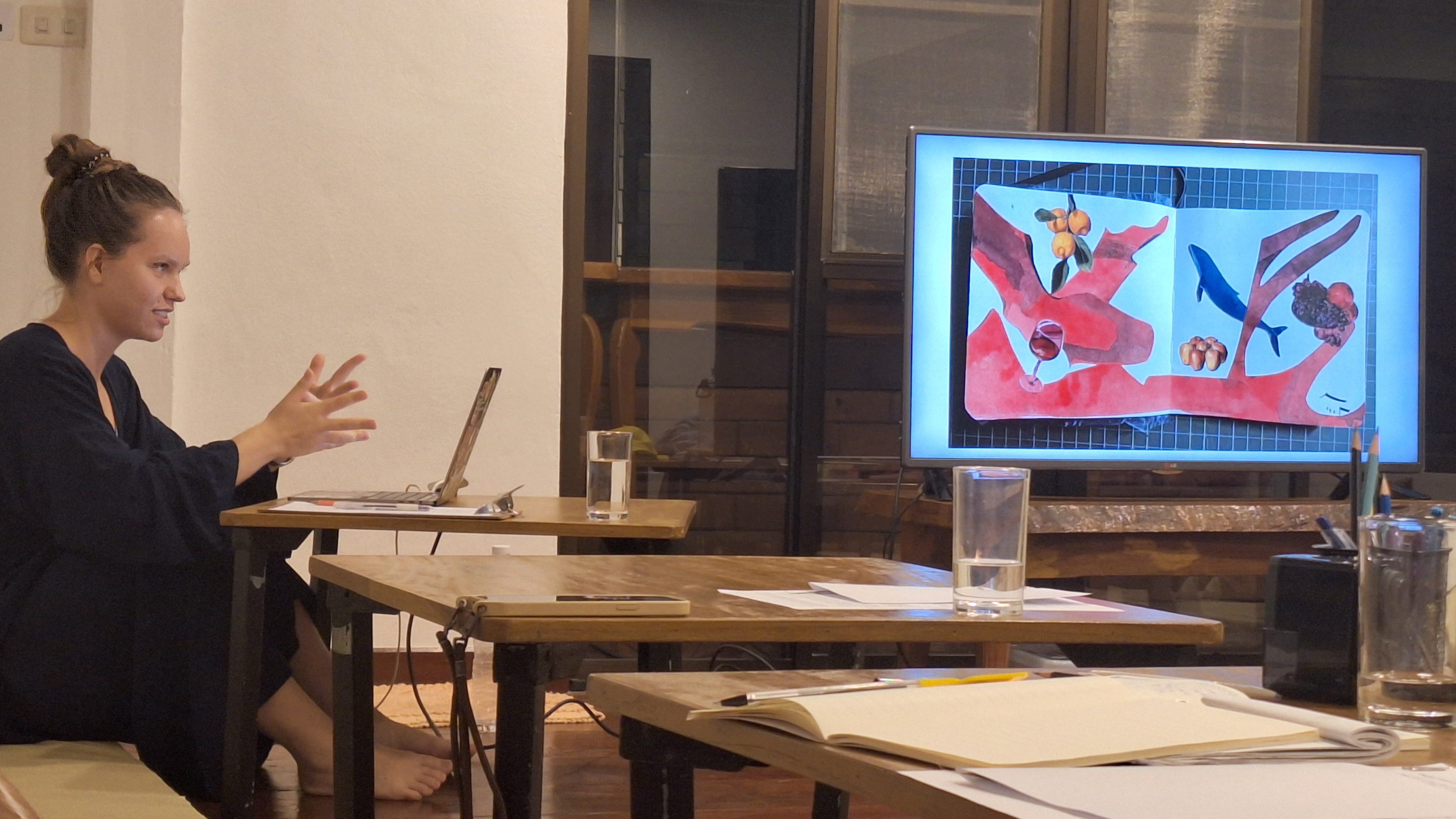
Ellamay, Ayza, and Aurelie who work in different styles and with different materials were united under the same themed programme named “Evolving Identities”. It is one of the core values of the residency, which is Dialogue & Exchange. Dialogue & Exchange of artists with each other, artists with the local community, artists with nature.
At the same time, Aom, the curator of the residency, aims to create a residency program that will satisfy artists’ interests and will gently introduce them to the Chiangmai artists community. Together we went to the personal exhibition of Thai performance artist Nontawat Machai “Soma-to-mnesis”. The exhibition featured photographs, moving images, and performances artefacts by Nontawat Machai. Each of us bought a book with the artist’s poems. One of the poems goes as follows:
“Drifting through an ocean of letters,
Let the land breeze and sea wind
choose the course.”
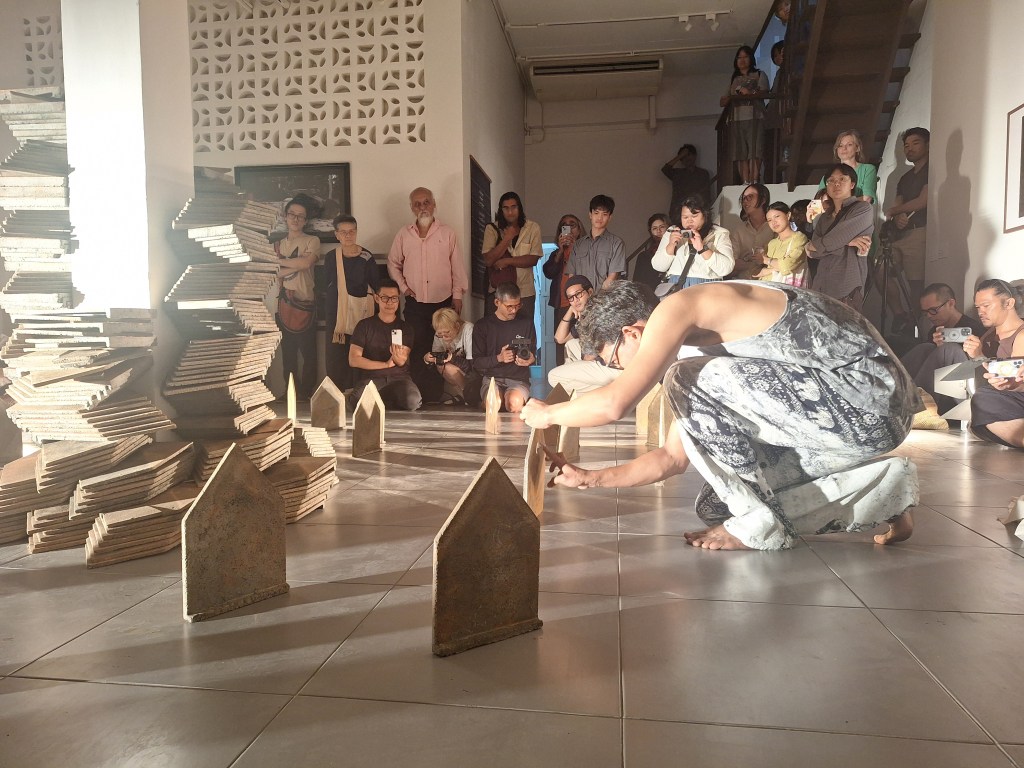
Being present with creativity, nature, and community and trusting the process is what Studio 88 invites you to do.
Overall, Creative Research Stay is a great way to start your exploration of the artistic community of Chiangmai or just give some time to yourself. The flexibility of the Creative Research Stay program is its huge advantage. You can walk out and communicate, share, explore or, alternatively, you can hide in your bungalow and read or write in the jungles. It is a nice opportunity for artists as well – explore the space and the team before you decide to commit to a long-term residency program.
I am sending my heartfelt thanks to the residency team and homestay staff for the opportunity to be there!
It is Studio 88’s pleasure to have hosted Sasha. We look forward to exciting collaboration in the future!
The Studio 88 Creative Research Stay is a short, self-directed stay for artists, curators, writers, and other creative practitioners who want to spend some time in Chiang Mai without committing to a longer programme. If this sounds like something you need right now, you’re welcome to get in touch. Apply for the Creative Research Stay
Alternatively Studio 88 accepts applications on an ongoing basis. Check out our residency program and apply now.
 Studio 88 Artist Residency